Latest Federal Reserve Decision is already influencing borrowing costs across the United States. While headlines often focus on markets and inflation numbers, the real impact is felt much closer to home — in credit card bills, loan payments, and even savings accounts.
If you’re wondering how the latest Federal Reserve decision affects your everyday finances, this guide breaks it down clearly and calmly.
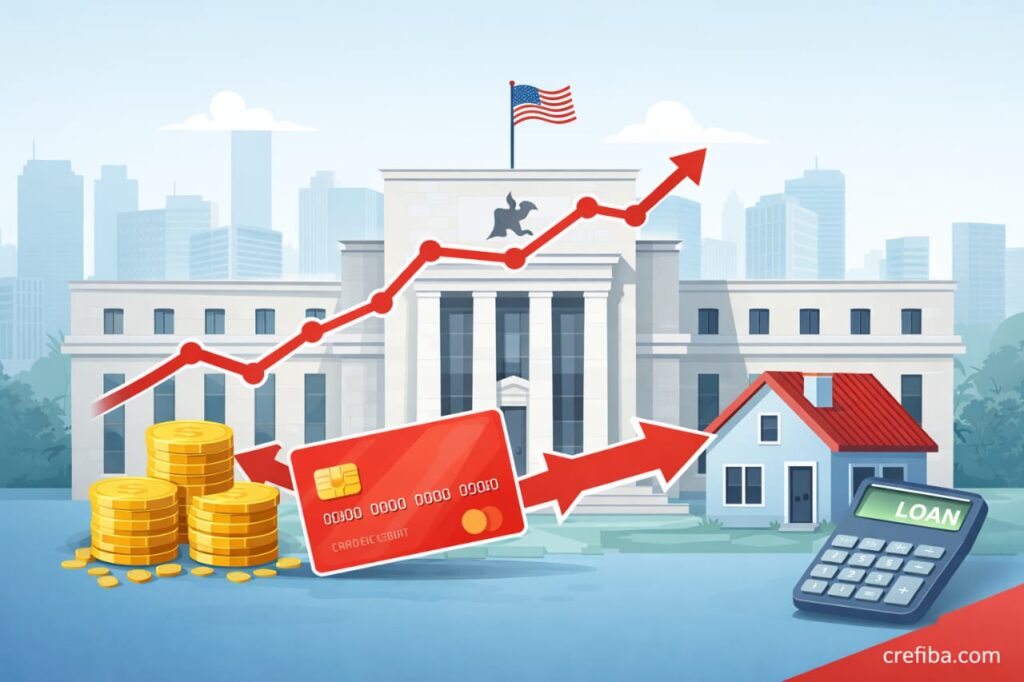
What Actually Changed?
Here’s what happened — without jargon or speculation:
- The Federal Reserve adjusted its benchmark interest rate to manage inflation and economic growth
- This rate influences how much banks charge each other to borrow money
- Banks then pass these changes on to consumers through credit cards, loans, and mortgages
- The decision applies nationally and affects both new borrowing and variable-rate debt
No new law was passed, and no action is required from consumers immediately — but the ripple effects matter.
Why the Federal Reserve Makes These Decisions?
The Federal Reserve’s job is to maintain:
- Price stability (control inflation)
- Maximum employment
- A stable financial system
When inflation stays high or economic activity slows, the Fed adjusts rates to influence spending and borrowing behavior across the economy.
This isn’t new — similar decisions have shaped US consumer finances for decades.
Why This Matters to You (The Real Impact)?
Credit Cards
- Most US credit cards have variable APRs
- When the Fed raises rates, card interest usually increases within 1–2 billing cycles
- Carrying balances becomes more expensive over time
👉 If your credit score recently dropped unexpectedly, higher utilization combined with rising interest can play a role
Credit Score Drops Suddenly – USA
Personal & Auto Loans
- New loans may come with higher interest rates
- Existing fixed-rate loans stay the same
- Variable-rate loans may adjust upward
This can affect monthly budgets, especially for households planning major purchases.
Mortgages
- Fixed-rate mortgages are influenced indirectly
- Adjustable-rate mortgages (ARMs) are more sensitive
- Homebuyers may see affordability change even without price increases
Savings Accounts
- Higher rates can be good news for savers
- Some banks increase savings and CD rates
- Returns are gradual and vary by institution
SBI Model: Understanding the Impact Clearly
Situation:
Many Americans already rely on credit cards and loans to manage expenses.
Behavior:
People carry balances, pay minimums, or delay large purchases during uncertain times.
Impact:
When interest rates rise:
- Debt becomes more expensive
- Savings slowly become more rewarding
- Financial decisions require more planning
This shift is subtle — but powerful over time.
A Real-Life Example (USA-Based)
Imagine a household carrying a $6,000 credit card balance with a variable APR:
- Before the rate change: ~18% APR
- After adjustment: ~19.5% APR
That difference could mean hundreds of dollars more in interest over a year, even without additional spending.
This is why understanding Federal Reserve decisions matters — even if you never watch financial news.
Has This Happened Before?
Yes.
During previous inflation cycles, similar rate adjustments led to:
- Slower borrowing
- Higher credit card costs
- Increased focus on debt repayment
Over time, these decisions helped stabilize prices — but consumers had to adapt.
What Should Consumers Do Now?
No drastic action is required, but it helps to:
- Review credit card statements for APR changes
- Avoid carrying high balances when possible
- Understand how interest affects long-term costs
- Focus on credit fundamentals
If you’re still learning how credit works in the US, this guide may help:
Credit Score Basics – How It Works in the USA
Frequently Asked Questions
Does the latest Federal Reserve decision affect my credit score?
Not directly, but higher interest can increase balances, which may affect utilization — a key credit factor.
How quickly do banks adjust interest rates?
Most credit card issuers update APRs within one or two billing cycles.
Do fixed-rate loans change after a Fed decision?
No. Fixed-rate loans stay the same. Variable-rate products are more affected.
Should I stop using credit cards now?
Not necessarily. Responsible use and full payments remain effective strategies.
Are these decisions permanent?
No. Federal Reserve policies change based on economic conditions.

The Crefiba Research Team creates easy-to-understand, accurate, and practical content on credit, personal finance, and banking in the United States. Our articles are carefully researched using trusted sources such as Experian, Equifax, TransUnion, and U.S. financial institutions, and are written to help everyday people make smarter financial decisions.
Learn more: About Crefiba • Editorial Standards