If you’re building your financial life in the United States, understanding what a good credit score in the USA means is extremely important. Your credit score affects whether you qualify for credit cards, loans, mortgages, and even rental housing.
In this guide, you’ll learn what is considered a good credit score, how credit score ranges work in the USA, and what a good score actually allows you to do in real life.
What Is a Credit Score? (Quick Recap)
A credit score is a three-digit number that represents how trustworthy you are as a borrower. Lenders use your credit score to decide whether to approve you for loans or credit cards and what interest rate to offer.
In the USA, most lenders use the FICO score, which ranges from 300 to 850.
👉 If you’re new to this topic, read our detailed guide: HERE
Credit Score Basics: How It Works in the USA
What Is Considered a Good Credit Score in the USA?
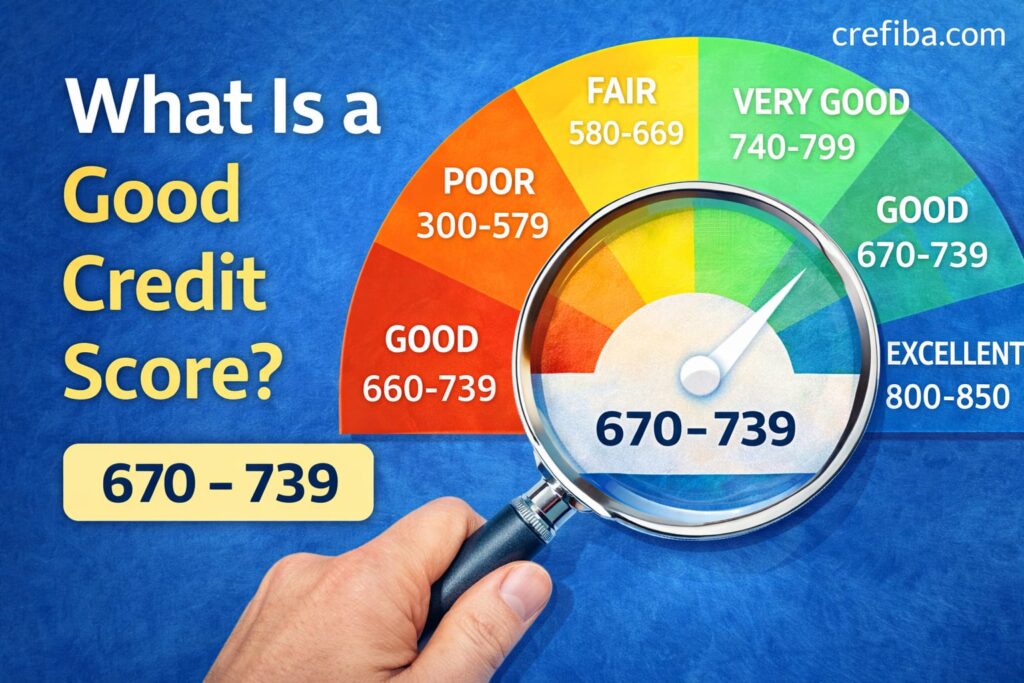
A good credit score in the USA is generally considered to be between 670 and 739.
If your score falls in this range, lenders usually see you as a reliable borrower, and you can qualify for most financial products at reasonable interest rates.
Here’s the simple breakdown:
Below 670 → Needs improvement
670 or higher → Good credit
740+ → Very good to excellent credit
Credit Score Ranges in the USA (Chart Explained)
| Credit Score Range | Category | What It Means |
| 300-579 | Poor | High risk, approvals are difficult |
| 580-669 | Fair | Limited options, higher interest |
| 670-739 | Good | Approved for most loans & cards |
| 740-799 | Very Good | Better rates, higher limits |
| 800-850 | Excellent | Best rates and premium offers |
If your score is 670 or above, you’re officially in the good credit score range.
What Can You Do With a Good Credit Score?
Having a good credit score in the USA unlocks many financial benefits.
Get Approved for Credit Cards
With a good credit score, you can qualify for:
Cashback credit cards
Travel rewards cards
Low annual fee cards
You may not get the top premium cards yet, but approvals become much easier.
Qualify for Loans at Better Rates
A good credit score helps you get:
Personal loans
Auto loans
Student loan refinancing
You’ll also pay lower interest compared to fair or poor credit borrowers.
Rent an Apartment More Easily
Many landlords check credit scores. A good score shows that you:
Pay bills on time
Are financially responsible
This improves your chances of rental approval.
Lower Insurance Costs
In many U.S. states, insurers use credit-based scores. A good credit score can help reduce:
Auto insurance premiums
Home insurance costs
What Is the Average Credit Score in the USA?
As of recent data, the average credit score in the USA is around 715.
This means: a score near 700 is normal
You don’t need a perfect score to be financially successful
Being slightly above average already puts you in a strong position.
Is 700 a Good Credit Score?
Yes, 700 is a good credit score in the USA. With a 700 credit score, you can get approved for most credit cards.
Qualify for auto loans at decent rates. be seen as a low-risk borrower. While 700 isn’t “excellent,” it’s a solid and respectable score.
How Long Does It Take to Reach a Good Credit Score?
The time it takes depends on your starting point. From fair credit (580–650) → 6 to 18 months
From poor credit → 1 to 2+ years Consistency matters more than speed. Paying bills on time and keeping balances low makes the biggest difference.
Common Myths About a Good Credit Score
Many beginners believe incorrect things about credit scores. Let’s clear them up.
Myth 1: You Need an 800+ Score
❌ False
Most benefits start at 670–700.
Myth 2: Checking Your Credit Hurts It
❌ False
Checking your own credit score does not lower it.
Myth 3: Income Affects Credit Score
❌ False
Your salary does not impact your credit score.
How to Move From Fair to Good Credit Score?
If your score is below 670, focus on these basics:
- Pay all bills on time
- Keep credit card usage below 30%
- Avoid applying for too much credit
- Keep old accounts open
- Check your credit report for errors
Small improvements done consistently can move your score into the good credit score range faster than you expect.
Final Takeaway
A good credit score in the USA starts at 670 and opens the door to better financial opportunities. You don’t need a perfect score—just responsible habits and patience.
Once you reach a good credit score, maintaining it becomes much easier than building it from scratch.
Why Trust Crefiba?
At Crefiba, we simplify complex U.S. credit and finance topics for beginners and everyday consumers. Our content is carefully researched using official credit bureau guidelines, lender practices, and real-world financial scenarios to ensure accuracy and clarity.
Our goal is to help readers make smarter financial decisions, avoid common credit mistakes, and confidently navigate the U.S. credit system.
Frequently Asked Questions (FAQs)
What is a good credit score in the USA?
A good credit score in the USA is typically between 670 and 739. This range allows you to qualify for most loans and credit cards at reasonable interest rates.
Is 700 considered a good credit score?
Yes, 700 is a good credit score. It shows lenders that you are a responsible borrower and makes it easier to get approved for credit products.
What credit score is needed to buy a house in the USA?
Most lenders prefer a minimum credit score of 620, but a score above 670 helps you get better mortgage rates and lower monthly payments.
Can you live comfortably with a 650 credit score?
You can manage basic financial needs with a 650 score, but interest rates will be higher. Improving your score to 670 or above can save you significant money over time.
How often does a credit score change?
Your credit score can change monthly or even weekly, depending on payments, balances, and new credit activity reported to credit bureaus.

The Crefiba Research Team creates easy-to-understand, accurate, and practical content on credit, personal finance, and banking in the United States. Our articles are carefully researched using trusted sources such as Experian, Equifax, TransUnion, and U.S. financial institutions, and are written to help everyday people make smarter financial decisions.
Learn more: About Crefiba • Editorial Standards