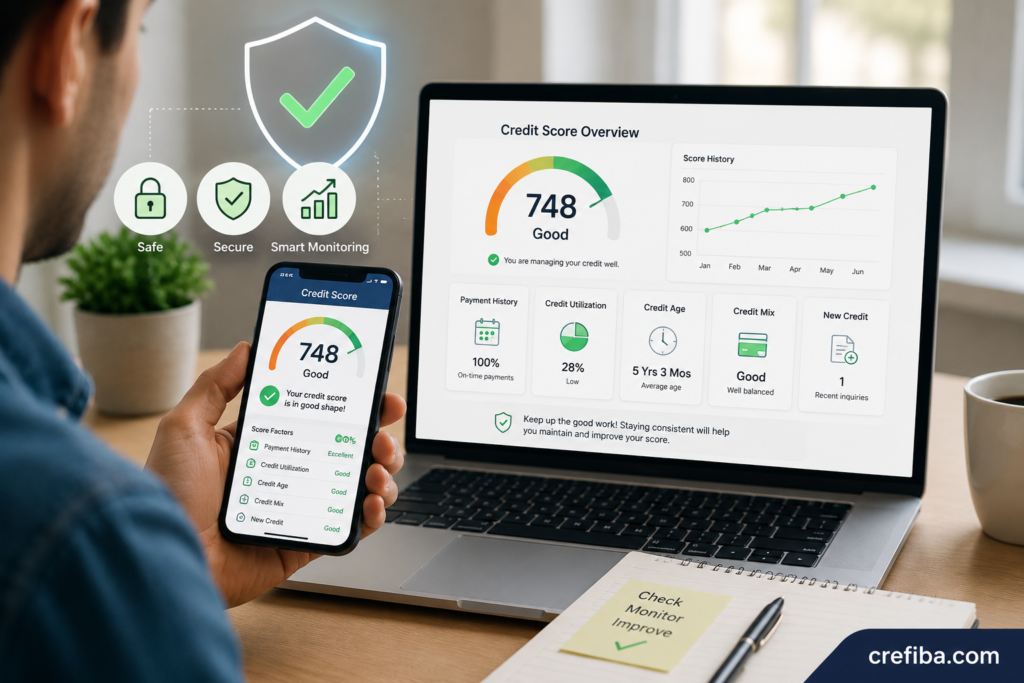
Does checking your credit score lower it? No—but understanding the difference between soft and hard inquiries is important.
In this guide, you’ll learn why checking your own credit score doesn’t lower it, when a hard inquiry can affect your score, and how to monitor your credit safely in the United States.
Why People Think Checking Credit Score Lowers It?
Many people believe checking their credit score lowers it because they confuse checking their own credit with applying for new credit.
Although both involve reviewing your credit history, they are treated very differently by credit scoring models.
Checking your own credit score creates a soft inquiry, which doesn’t affect your score.
Applying for a credit card, loan, or mortgage usually results in a hard inquiry, which may temporarily lower your score by a few points.
Understanding this difference is the key to knowing why checking your own credit score is completely safe.
Soft Inquiry vs. Hard Inquiry: What’s the Difference?
Understanding this difference clears everything.
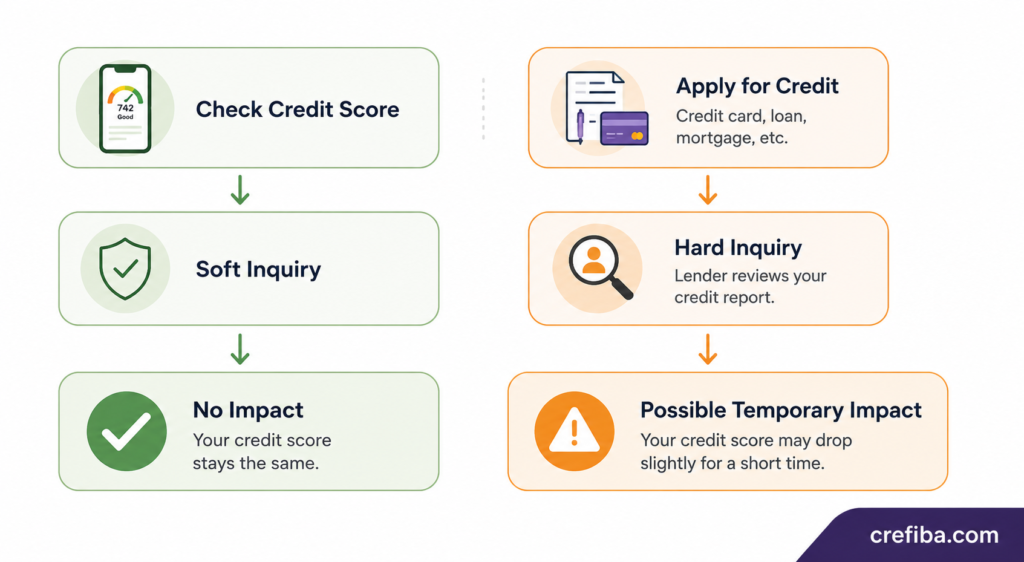
✅ Soft Inquiry (Safe – No Impact)
A soft inquiry happens when:
- You check your own credit score
- A bank pre-approves you
- A credit monitoring app checks your score
- A soft inquiry occurs when your credit is checked for informational purposes rather than as part of a credit application.
✔ Does NOT lower your credit score
✔ Does NOT appear to lenders
✔ Can be done as often as you want
❌ Hard Inquiry (Can Lower Score)
A hard inquiry happens when:
- You apply for a credit card
- You apply for a loan or mortgage
- A lender checks your credit to approve you
⚠ May temporarily lower your credit score by a few points.
⚠ Too many hard inquiries can add up
Simple Example
Think of your credit score like a bank passbook:
- Checking your balance → No problem
- Requesting a loan → Bank evaluates risk
In the same way:
- Checking your credit score = safe
- Applying for credit = evaluation (hard inquiry)
Does Checking Your Credit Score on Apps Lower It?
No. Most credit monitoring apps and services use soft inquiries, so checking your score through them won’t affect your credit score.
You can safely check your score through:
- Your bank or credit card issuer
- Credit monitoring services
- Credit bureaus offering free score access
Regularly checking your credit can even help you spot errors, identity theft, or unexpected changes sooner.
If Checking Your Credit Score Doesn’t Lower It, What Does?
If checking your own credit score doesn’t lower it, you might be wondering why your score sometimes changes. The truth is that credit scores are updated based on your financial activity, not because you viewed your score.
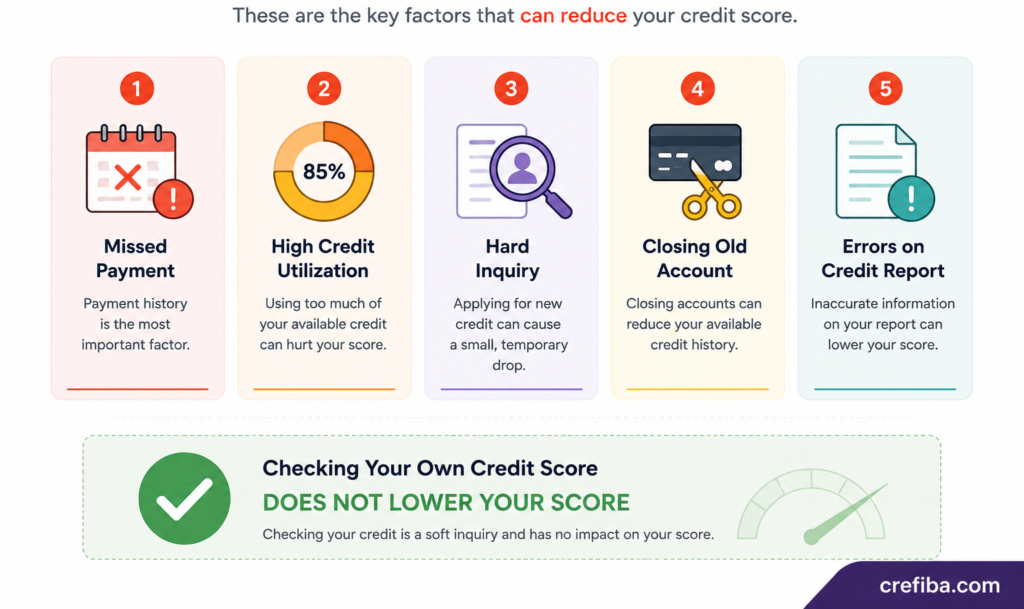
Changes such as missed payments, higher credit card balances, new credit applications, or updates to your credit report can all affect your score. Understanding these factors can help you focus on the habits that actually matter instead of worrying about checking your credit score.
Below are the most common reasons a credit score can drop.
Want to know why your score changed? Read our guide on Why Your Credit Score Drops Suddenly in the USA, where we explain the most common reasons in detail.
Missed or Late Payments
Your payment history is the single most important factor affecting your credit score. If you miss a payment or pay after the due date, your lender may report it to the credit bureaus, which can cause your score to decrease.
Even one missed payment can have a noticeable impact, especially if you previously had a strong credit history. The longer an account remains unpaid, the greater the potential effect on your credit profile.
To avoid this, pay at least the minimum amount due before the payment deadline every month. Setting up automatic payments or reminders can help you stay on track. Consistently paying your bills on time is one of the most effective ways to maintain and improve your credit score over the long term.
High Credit Card Balances
Another common reason a credit score drops is high credit utilization. This refers to the percentage of your available credit that you’re currently using.
For example, if your credit card has a $5,000 limit and your balance is $2,500, your utilization rate is 50%. Higher utilization may signal increased borrowing risk to lenders and can negatively affect your score.
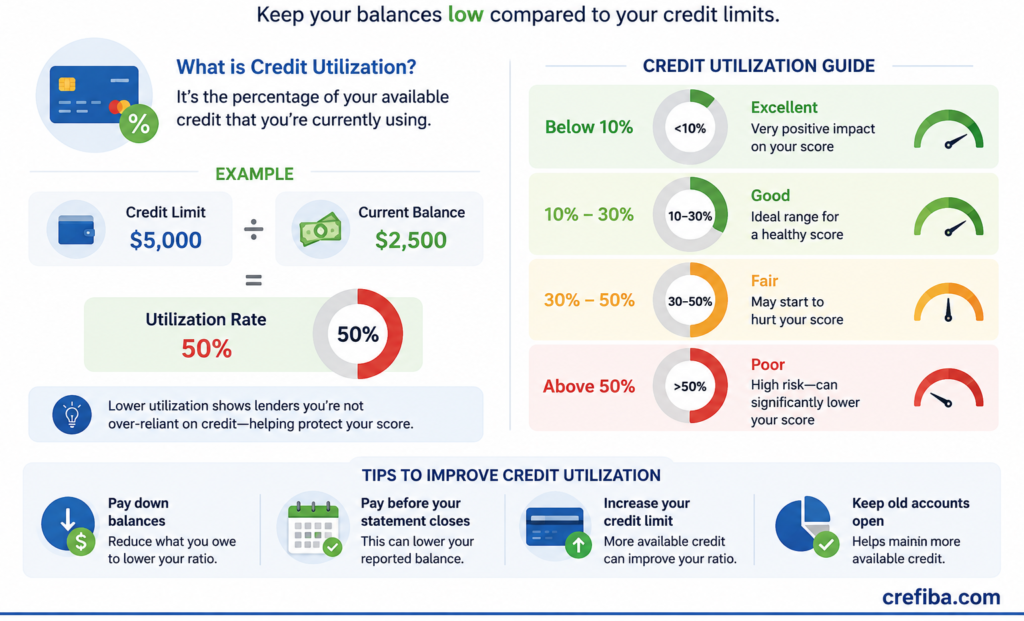
Many financial experts recommend keeping your utilization below 30%, while lower is generally better.
If your score recently decreased, reviewing your current credit card balances may provide the answer. Paying down balances before your statement closes can often help improve your credit utilization and your score over time.
Applying for New Credit
Applying for a new credit card, auto loan, personal loan, or mortgage usually results in a hard inquiry on your credit report.
Unlike checking your own credit score, which creates a soft inquiry, a hard inquiry may temporarily lower your credit score by a few points.
A single hard inquiry generally isn’t a major concern, but submitting several credit applications within a short period can have a greater impact because it may suggest increased credit risk.
Before applying for new credit, it’s a good idea to check your own credit score first. Since this creates only a soft inquiry, it won’t affect your score and can help you understand your approval chances.
Closing an Old Credit Account
Closing a credit card account may seem like a responsible financial decision, but it can sometimes lower your credit score.
When you close an older account, you may reduce your total available credit, which can increase your credit utilization ratio. Over time, it may also affect the average age of your credit accounts, another factor considered by many credit scoring models.
If the card has no annual fee and you don’t need to close it, keeping it open may benefit your credit history. However, every financial situation is different, so it’s important to weigh the costs and benefits before closing an account.
Errors or New Information on Your Credit Report
Sometimes a credit score changes because new information has been added to your credit report. This could include a recently reported payment, a new account, an updated balance, or even an error.
Mistakes on credit reports are uncommon but can happen. That’s why regularly reviewing both your credit score and your credit report is a smart financial habit.
If you notice information that doesn’t look correct, you can dispute it with the appropriate credit bureau. Identifying and correcting reporting errors can help protect your credit score and ensure lenders see accurate information about your credit history.
How Often Should You Check Your Credit Score?
For most people in the USA:
- Once a month is ideal
- More often if you’re:
- Building credit
- Fixing credit
- Planning a loan
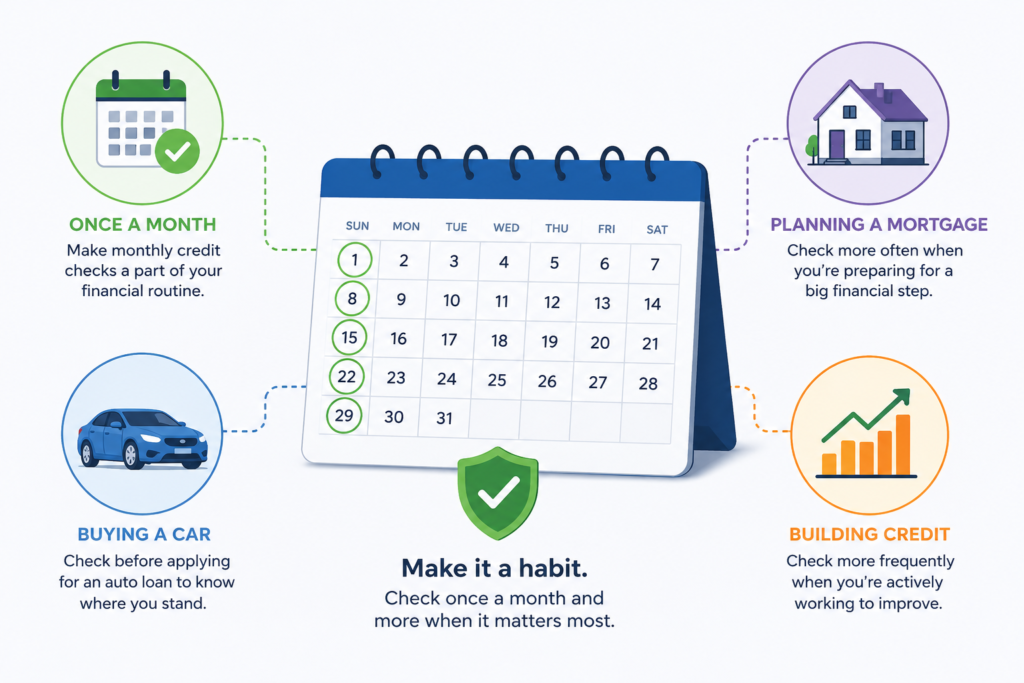
Since checking your own credit score creates only a soft inquiry, you can check it as often as needed without affecting your score.
Some banks and credit card issuers provide free access to your FICO® Score. You can also learn more about FICO Scores on the official FICO website.
Does Checking Credit Score Affect Loan Approval?
No.
Lenders cannot see:
- Your personal credit checks
- Soft inquiries from monitoring tools
They only see hard inquiries made during applications. While lenders may consider recent hard inquiries during their review, checking your own credit score before applying won’t affect your approval.
What the Major Credit Bureaus Say
According to Experian, Equifax, and the Consumer Financial Protection Bureau (CFPB), checking your own credit score creates a soft inquiry, which does not affect your credit score.
These organizations also explain that only hard inquiries, such as those made when applying for new credit, may have a temporary impact.
Key Takeaways
- Checking your own credit score does not lower it.
- Soft inquiries have no impact on your credit score.
- Hard inquiries may temporarily lower your score when you apply for new credit.
- Regularly monitoring your credit can help you spot errors and track your progress.
Don’t avoid checking your credit score because of this myth. Regularly monitoring your credit can help you spot errors, detect fraud, and track your financial progress.
Final Thought
Checking your own credit score is one of the simplest ways to stay informed about your financial health. Since it doesn’t affect your score, there’s no reason to avoid it. Regular monitoring can help you catch errors early, track your progress, and make more confident borrowing decisions.
📢 Found this guide helpful?
Share it with friends or family who worry about their credit score. Many people still believe this common myth, and sharing accurate information can help them make better financial decisions.
Does checking your credit score lower it every time?
No. Checking your own credit score creates a soft inquiry, which does not affect your credit score. Only hard inquiries from credit applications may temporarily lower your score.
Can I check my credit score daily?
Yes. Daily checks using monitoring tools are safe.
How long does a hard inquiry affect credit score?
A hard inquiry can remain on your credit report for up to two years, but its effect on your credit score usually fades much sooner.
Is checking my credit score before applying for a loan a good idea?
Yes. Checking your credit score before applying helps you understand where you stand and gives you a chance to address any issues before a lender reviews your credit.

The Crefiba Research Team creates easy-to-understand, accurate, and practical content on credit, personal finance, and banking in the United States. Our articles are carefully researched using trusted sources such as Experian, Equifax, TransUnion, and U.S. financial institutions, and are written to help everyday people make smarter financial decisions.
Learn more: About Crefiba • Editorial Standards