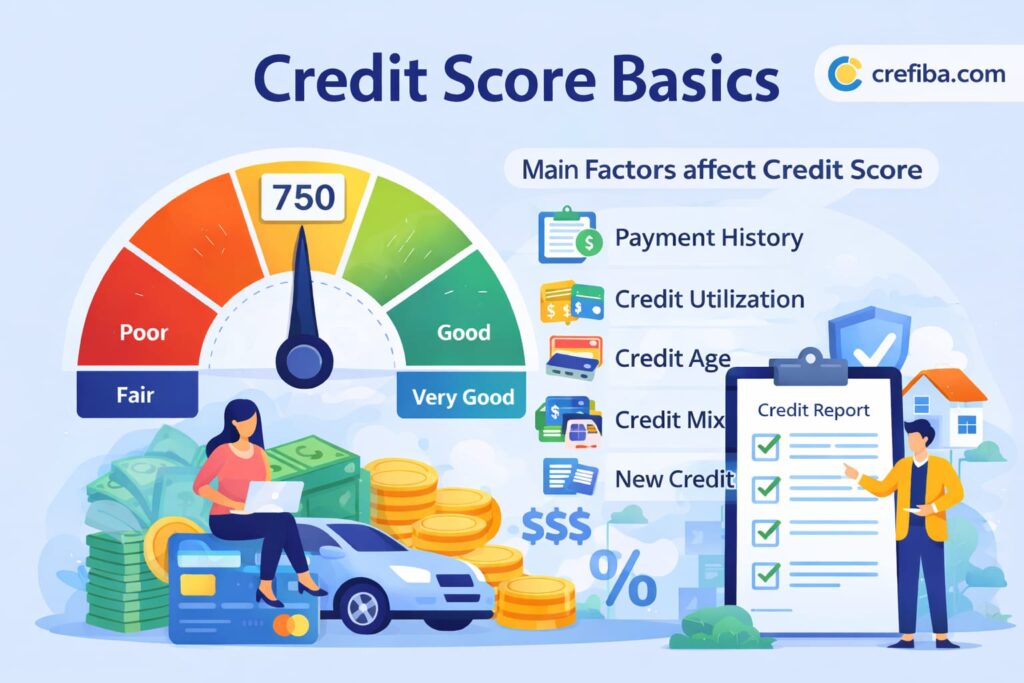
If you live in the United States, your credit score plays a major role in your financial life. Whether you are applying for a credit card, renting an apartment, buying a car, or even setting up utility services, your credit score often determines what options are available to you.
This guide explains credit score basics in simple terms, so you can understand how it works in the USA and why it matters.
What Is a Credit Score?
A credit score is a three-digit number that represents how reliable you are as a borrower. It helps lenders decide how risky it would be to lend money to you.
In the United States, credit scores usually range from 300 to 850.
A higher score means you are seen as a lower-risk borrower.
Your credit score is based on information from your credit report, which tracks your borrowing and repayment history. According to Experian, payment history is the most important factor in your credit score
If you’re just starting, explore more credit basics guides on Crefiba to understand how the U.S. financial system works.
Why Credit Scores Matter in the United States
Credit scores are used almost everywhere in the US financial system. They help companies decide whether to trust you financially.
Your credit score can affect:
Approval for credit cards and loans
Interest rates you are offered
Renting an apartment or house
Auto financing
Insurance premiums in some states
A good credit score can save you thousands of dollars over time through lower interest rates and better financial options.
What Is a Good Credit Score Range?
Here is a general breakdown of credit score ranges used in the USA:
300–579: Poor
580–669: Fair
670–739: Good
740–799: Very Good
800–850: Excellent
Most lenders consider a score of 670 or higher to be good. The higher your score, the better your chances of approval and favorable terms.
Main Factors That Affect Your Credit Score
Your credit score is calculated using several factors. Understanding these helps you make better financial decisions.
Payment History
This is the most important factor. It shows whether you pay your bills on time.
Late payments, missed payments, and accounts sent to collections can significantly lower your score.
Credit Utilization
Credit utilization refers to how much of your available credit you are using.
For example, if your credit card limit is $1,000 and you use $300, your utilization is 30%.
Lower utilization is better for your score.
Length of Credit History
This looks at how long you have been using credit.
Older accounts and a longer credit history generally help your score, especially if the accounts are in good standing.
Credit Mix
Credit mix means having different types of credit, such as:
Credit cards
Auto loans
Student loans
You do not need every type, but having a mix can help.
New Credit
Opening several new accounts in a short time can lower your score temporarily. Each credit application may create a hard inquiry, which slightly impacts your score.
What Does NOT Affect Your Credit Score (Common Myths)
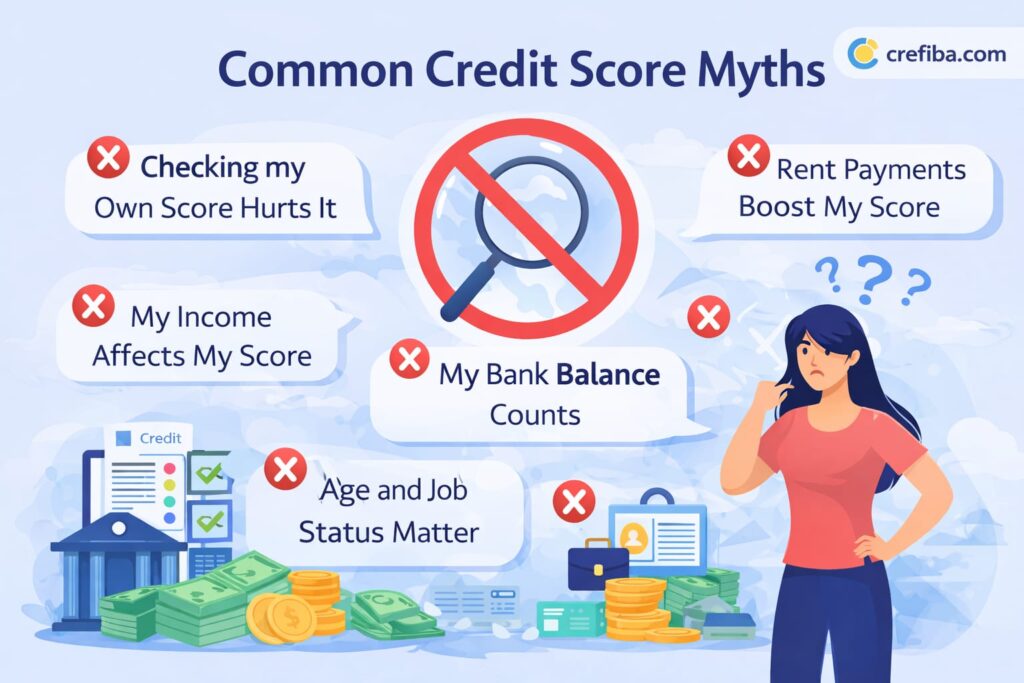
There are many misunderstandings about credit scores. Here are things that do not affect your credit score:
Checking your own credit score
Your income or salary
Your savings or bank balance
Paying rent or utilities (in most cases)
Age, gender, or employment status
Knowing these myths helps you avoid unnecessary worry.
How Credit Scores Are Used in Real Life
Credit scores are not just about borrowing money. They influence many everyday decisions.
For example:
Landlords may check your credit before approving a rental
Utility companies may require a deposit if your score is low
Lenders use your score to set interest rates
Credit card companies use it to decide limits and rewards
This is why maintaining a healthy credit score is important even if you are not planning to take a loan right now.
Final Thoughts for Beginners
Understanding credit score basics is the first step toward building strong financial health in the United States.
You do not need to be perfect, but small habits like paying bills on time, keeping balances low, and avoiding unnecessary credit applications can make a big difference over time.
Once you understand how credit scores work, you are in a much better position to make smart financial decisions confidently.
Credit scores in the United States are calculated using data reported to major credit bureaus like Experian, Equifax, and TransUnion. Understanding how this system works helps consumers make better borrowing decisions and avoid costly financial mistakes.
Credit Score Basics FAQs (USA)
What is a good credit score in the USA?
A good credit score in the USA generally ranges from 670 to 739. Scores above 740 are considered very good, while scores above 800 are excellent.
Does checking your credit score lower it?
No. Checking your own credit score is a soft inquiry and does not affect your score at all.
How often does a credit score update?
Credit scores usually update every 30–45 days, depending on when lenders report account activity to credit bureaus.
Can you build credit without a credit card?
Yes. You can build credit using credit-builder loans, secured loans, or authorized user accounts, even without a traditional credit card.
Why are credit scores different on different websites?
Different websites may use different scoring models (FICO vs VantageScore) or data from different credit bureaus, which causes small variations.

The Crefiba Research Team creates easy-to-understand, accurate, and practical content on credit, personal finance, and banking in the United States. Our articles are carefully researched using trusted sources such as Experian, Equifax, TransUnion, and U.S. financial institutions, and are written to help everyday people make smarter financial decisions.
Learn more: About Crefiba • Editorial Standards
Comments are closed.