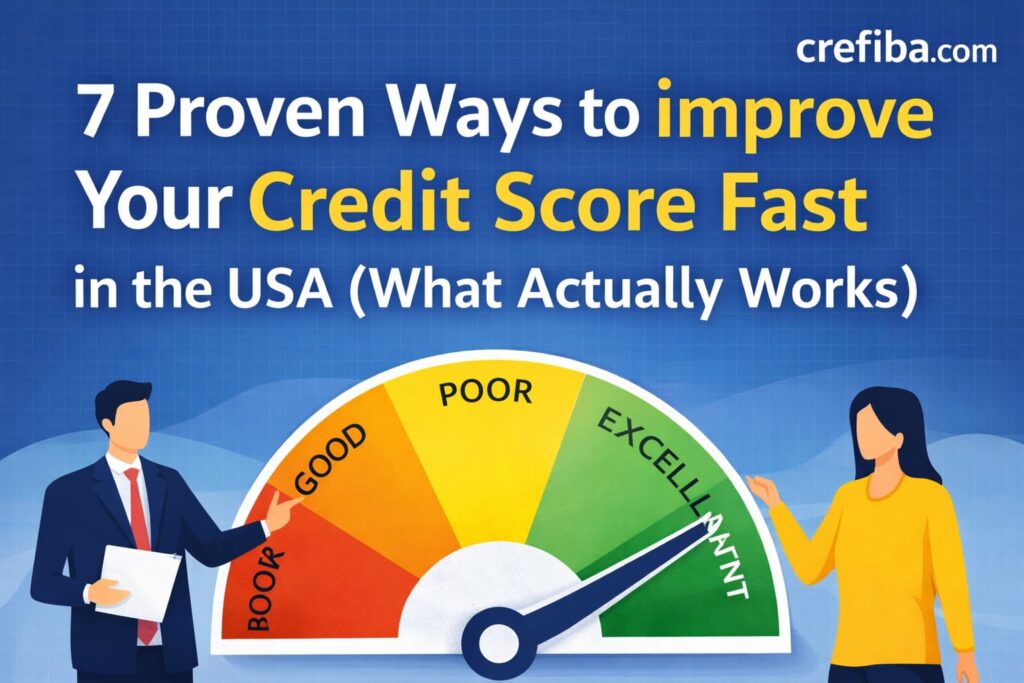
Improve credit score fast — that’s one of the most searched personal finance questions in the United States, and it usually comes from people who are doing something right but not seeing results.
If you’re paying your bills on time and still wondering why your credit score isn’t moving, this guide explains what actually works, what doesn’t, and how real people in the U.S. have improved their scores legally and sustainably.
Save this article — the steps here can help you within 30–90 days if applied correctly.
What “Fast” Really Means When we say Improve Credit Score Fast
When people say fast, they usually mean weeks, not years. In credit terms:
- 30 days → early signals appear
- 60–90 days → measurable score movement
- 6–12 months → strong, stable improvement
Credit scores don’t jump overnight, but they do respond quickly to the right behavior.
SBI model (Situation → Behavior → Impact):
- Situation: High balances, missed payments, thin credit history
- Behavior: You lower balances, stay consistent, stop risky actions
- Impact: Credit bureaus detect reduced risk → score improves
1. Lower Credit Utilization (This Has the Fastest Impact)
Credit utilization means how much of your available credit you’re using.
- 30% utilization = okay
- Under 10% = excellent
- Maxed-out cards = score killer
Real-life U.S. example
After the 2008 financial crisis, lenders tightened standards. Consumers who reduced balances below 30% saw faster score recoveries than those who only paid minimum dues.
What to do now
- Pay down balances, not just minimums
- Spread balances across cards if possible
- Aim for under 30%, ideally under 10%
2. Fix Late Payments (Even One Hurts)
A single late payment can drop your score by 60–100 points, especially if your credit was previously good.
If you recently missed a payment:
- Get current immediately
- Set autopay
- Avoid repeating the mistake
👉 Many people don’t realize that recent behavior matters more than old mistakes. Credit scoring models heavily weight the last 24 months.
3. Stop Applying for New Credit Temporarily
Every hard inquiry slightly lowers your score.
If your goal is to improve your credit score fast:
- Pause new credit applications
- Avoid “pre-approved” temptations
- Let your profile stabilize
This is why we explained earlier How checking your credit score does NOT lower it, but applying for credit does.
4. Dispute Genuine Credit Report Errors To Improve Credit Score Fast
Errors are more common than people think.
Common U.S. credit report mistakes:
- Paid accounts marked unpaid
- Incorrect balances
- Duplicate collections
According to guidance published by Experian, disputing verified errors can result in score improvements once corrections are processed.
Only dispute real errors — fake disputes can backfire.
5. Keep Old Accounts Open (History = Trust)
Credit history length matters.
Closing an old card:
- Shortens credit history
- Raises utilization
- Can drop your score
Unless there’s a fee issue, keep old accounts open, even if you don’t use them often.
6. Make On-Time Payments Boring (Consistency Wins)
Paying on time isn’t exciting — but it’s powerful.
Lenders look for:
- Patterns
- Stability
- Low-risk behavior
During the COVID-era relief period, borrowers who continued consistent payments recovered credit strength faster than those who paused unnecessarily.
7. Know What Will NOT Improve Your Credit Score Fast
Avoid these common myths:
- ❌ Paying bills early boosts scores
- ❌ Closing cards helps
- ❌ Credit repair “hacks”
- ❌ Constant monitoring changes scores
Improvement comes from behavior, not tricks.
Many people pay on time every month yet see little or no movement because other factors—like high credit utilization, limited credit mix, or reporting delays. If this sounds familiar, you may want to read our detailed breakdown on why your credit score isn’t increasing even when you pay on time
How Long Does It Take to See Real Results?
| Timeframe | What to Expect |
|---|---|
| 30 days | Small movement |
| 60–90 days | Noticeable improvement |
| 6 months | Strong upward trend |
| 12 months | Stable, lender-friendly profile |
Frequently Asked Questions About Improving Credit Scores

Can I improve my credit score in 30 days?
Yes, small improvements are possible if you reduce utilization and fix recent negatives.
What’s the safe legal way to improve credit score fast?
Lowering balances and stopping late payments.
Does paying off debt instantly boost credit scores?
It helps, but results depend on utilization and reporting cycles.
Should I close paid-off credit cards?
Usually no — keeping them open helps your score.
Final Thoughts
Improving your credit score fast in the USA is about doing fewer things — but doing them correctly. Focus on reducing risk signals, stay consistent, and give the system time to recognize the change.
If this helped you, save it and share it with someone who’s trying to rebuild their credit. The right information at the right time can make a real difference.

The Crefiba Research Team creates easy-to-understand, accurate, and practical content on credit, personal finance, and banking in the United States. Our articles are carefully researched using trusted sources such as Experian, Equifax, TransUnion, and U.S. financial institutions, and are written to help everyday people make smarter financial decisions.
Learn more: About Crefiba • Editorial Standards