
Is a 900 credit score possible? this question comes up more often than you might expect, especially among people who are actively trying to build “perfect credit.”
The short answer is no — a 900 credit score is not possible in the United States under current credit scoring models. But the reason why it’s not possible is far more important than the answer itself.
Understanding this clears confusion, prevents unrealistic expectations, and helps you focus on what actually improves your credit score in real life.
Why People Think a 900 Credit Score Exists
Many people believe a 900 credit score exists because of:
- Older scoring models (used decades ago)
- Credit systems in other countries
- Social media misinformation
- Marketing language like “perfect credit”
In some countries (for example, India’s CIBIL system), scores can go up to 900. When people see this online, they often assume the same applies in the U.S.
But U.S. credit scoring works differently.
What Is the Highest Credit Score Possible in the USA?
In the United States, the maximum credit score is 850 under:
- FICO Score
- VantageScore
There is no active U.S. credit model that goes to 900.
So if someone claims they have a 900 credit score in the USA, it usually means:
- They misunderstood the scale
- They’re confusing international systems
- They’re repeating outdated or incorrect information
In the United States, the most widely used credit scoring models are FICO Score and VantageScore, both of which cap scores at 850. According to Experian, one of the three major credit bureaus, scores above 800 are already considered excellent, and there is no scoring model currently in use that allows a credit score to reach 900. This design helps lenders focus on consistent financial behavior rather than chasing unrealistic numbers.
What Is Considered a “Perfect” Credit Score?
In practical terms:
- 800–850 is considered excellent
- Lenders treat 820 and 850 almost the same
- There is no special benefit for chasing a perfect number
This is important because many people stress unnecessarily, trying to “push” their score beyond what lenders actually care about.
👉 This also explains why your credit score may stop increasing even when you pay everything on time.
Why Your Credit Score Isn’t Increasing Even When You Pay on Time
How Credit Scores Are Actually Calculated in the USA
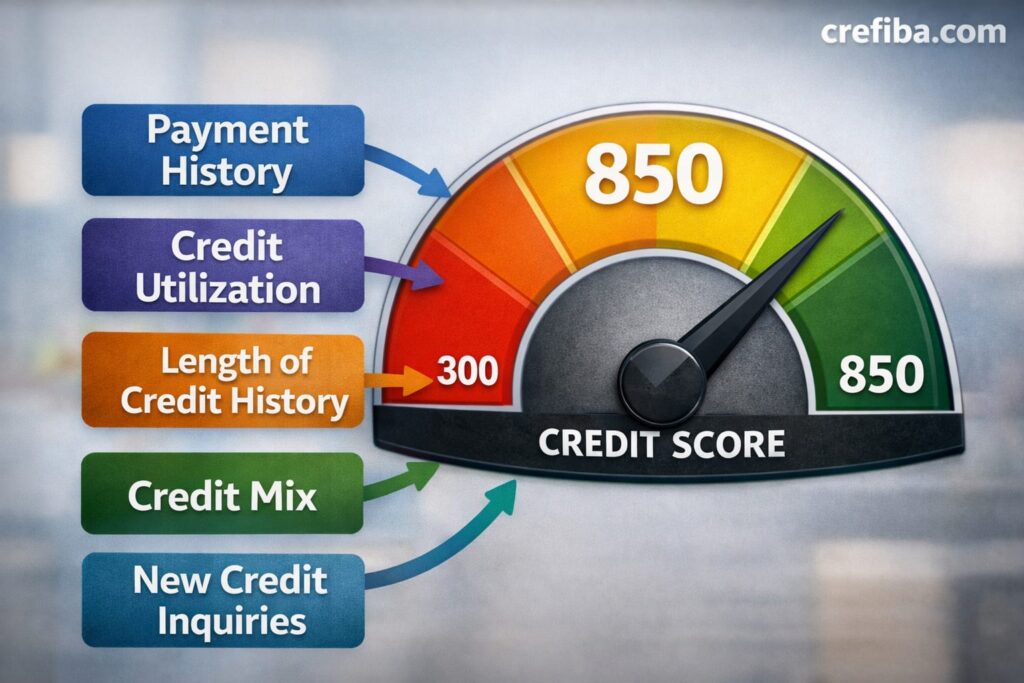
Your credit score is based on five core factors:
- Payment history
- Credit utilization
- Length of credit history
- Credit mix
- New credit inquiries
Notice what’s missing:
There is no factor that allows your score to exceed the model’s maximum.
That’s why a 900 score simply doesn’t fit into the system.
Can a Credit Score Ever Go Above 850?
Under current U.S. models, no.
However, credit scoring models evolve. Over the last few decades:
- Score ranges have been adjusted
- Weight of factors has changed
- New data sources were introduced
If a future model changes the scale, that could be different — but as of today, 850 is the top.
Why Chasing a “Perfect” Score Can Backfire
Ironically, obsessing over a perfect score can hurt you.
People chasing perfection often:
- Avoid closing unused cards (even when it makes sense)
- Stop using credit entirely
- Fear normal financial actions
This can lead to stagnation or sudden drops due to inactivity or utilization spikes.
How credit scores can drop suddenly despite “doing nothing wrong.” Why Credit Scores Drop Suddenly (in the USA)
Real-Life Example (USA)
Consider this scenario:
A salaried professional in Texas had an 832 credit score. He stopped using his credit cards completely, thinking inactivity would push him toward “900.”
Instead:
- His utilization dropped to zero
- Lenders saw inactivity
- His score stopped moving — then dipped slightly
The system didn’t reward perfection — it rewarded healthy usage.
What You Should Aim for Instead of 900
Instead of chasing an impossible number, aim for:
- Consistent on-time payments
- Utilization under 30%
- Long-term account stability
- Smart, infrequent credit applications
This is how people actually qualify for:
- Lower interest rates
- Better approvals
- Premium financial products
👉 For a practical roadmap, see: How to Improve Your Credit Score Fast in the USA
How Long Does It Take to Reach Excellent Credit?
Reaching the top credit tier is a time-based process, not a hack.
Most people with 800+ scores have:
- 7–15 years of credit history
- No recent late payments
- Balanced credit usage
👉 Timeline matters more than tricks: How Long Does It Take to Build Credit in the USA
Myths vs Facts About a 900 Credit Score
Myth: A 900 credit score exists
Fact: U.S. scores max at 850
Myth: Higher is always better
Fact: After ~800, benefits flatten
Myth: You must reach perfection
Fact: Lenders focus on behavior, not perfection
Frequently Asked Questions
Is a 900 credit score possible in the USA?
No. The highest possible credit score under current U.S. models is 850.
What is the highest credit score ever?
Under modern systems, 850 is the maximum. Older or international models may differ.
Why do some websites mention a 900 credit score?
They often refer to non-U.S. systems, outdated models, or use the number symbolically.
Is 850 better than 800?
In most cases, lenders treat both the same.
Can lenders see a difference between 820 and 850?
Rarely. Approval decisions are usually identical.
Final Takeaway
A 900 credit score is not possible in the USA, and chasing it can distract you from what actually matters.
Focus on healthy financial behavior, not mythical numbers. That’s how real credit strength is built — and maintained.

The Crefiba Research Team creates easy-to-understand, accurate, and practical content on credit, personal finance, and banking in the United States. Our articles are carefully researched using trusted sources such as Experian, Equifax, TransUnion, and U.S. financial institutions, and are written to help everyday people make smarter financial decisions.
Learn more: About Crefiba • Editorial Standards